The Dossier
Every entry, newest first.

So you’ve spilled oil in port: six mistakes that hurt more than the spill
After an oil spill in port, how a vessel behaves in the first hours matters more than the quantity. Six common mistakes, from late notification to tidied-up records,…
A.P.E.M. of a casualty: four stages of casualty management
The four stages of voyage planning, Appraisal, Planning, Execution and Monitoring, translate directly into casualty management. What each stage involves, and why it is a loop, not a…
Beyond surveys: managing distressed cargo
Managing distressed cargo after a container casualty has little to do with survey work alone. Nine steps from risk profiling to cost control, from someone who has done…
Compliance is not safety
Compliance is evidence that the paperwork was done, not that the job was safe. Why checklists and procedures only work when people can say stop.
Experience is just bias with good PR
Years at sea do not guarantee years of learning. Experience builds pattern recognition and confidence, and both can quietly narrow judgement. Why safe ships need friction, not less…
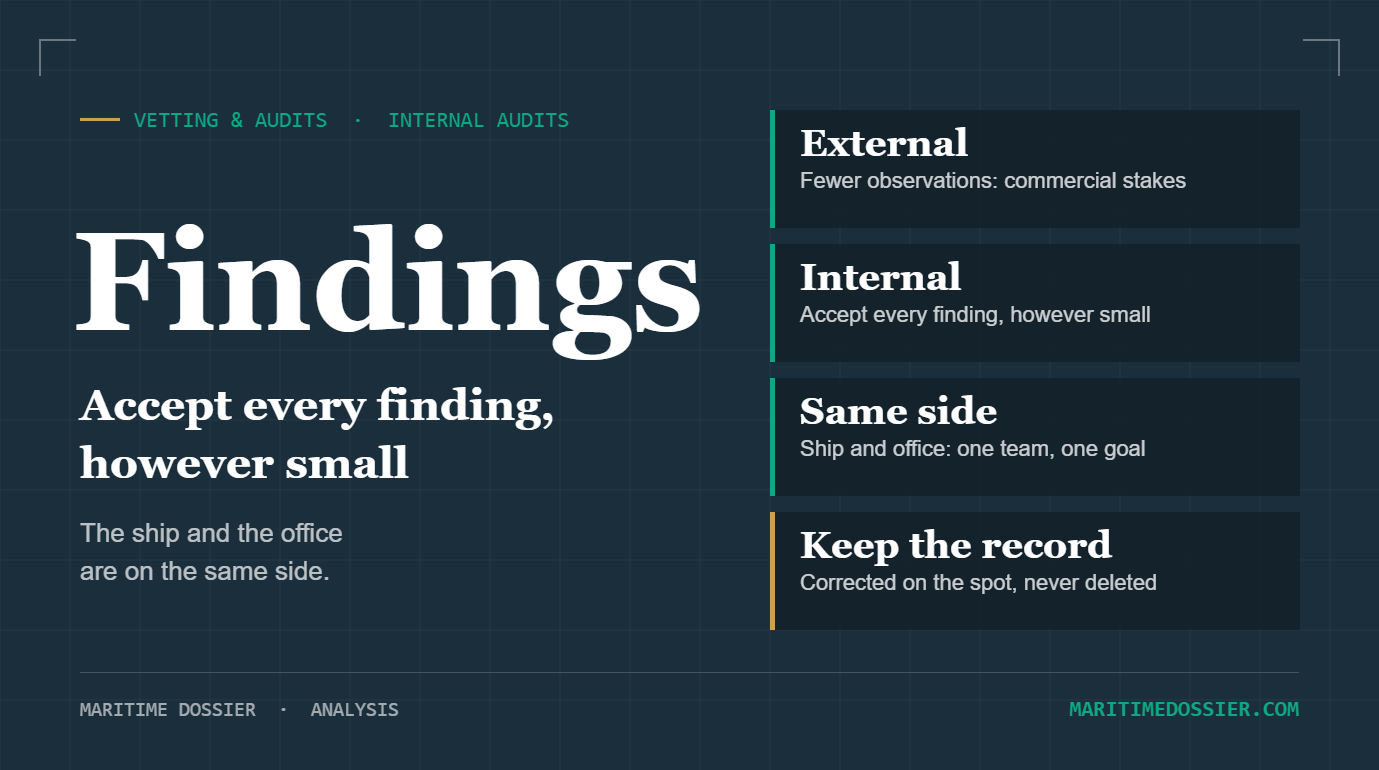
Accept every finding, however small
Fewer observations is the right goal for PSC, SIRE and RISQ. Internally the aim is different: accept every finding, however small, and fix it. The ship and the…
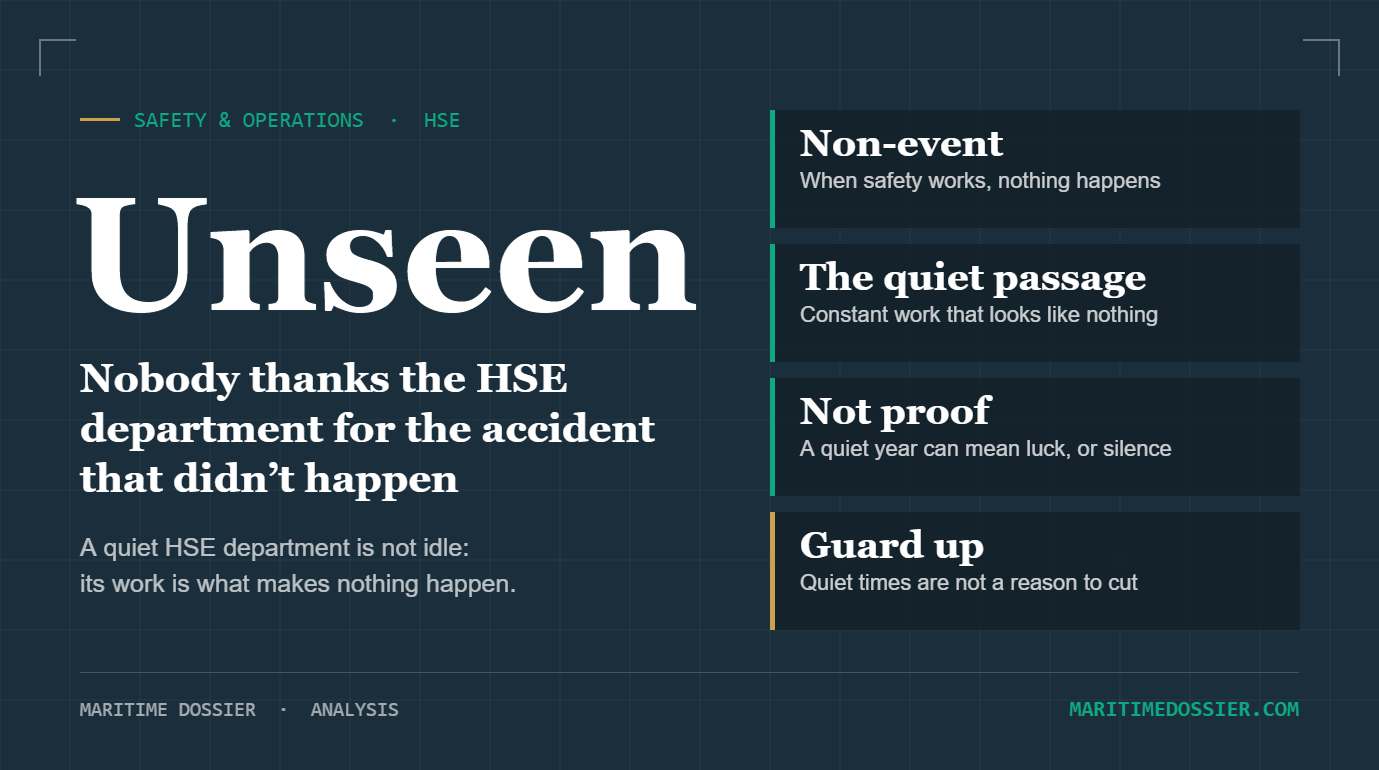
Nobody thanks the HSE department for the accident that didn’t happen
A quiet HSE department is not an idle one: its work is what makes nothing happen. Why a quiet year is not proof of safety, and why quiet…
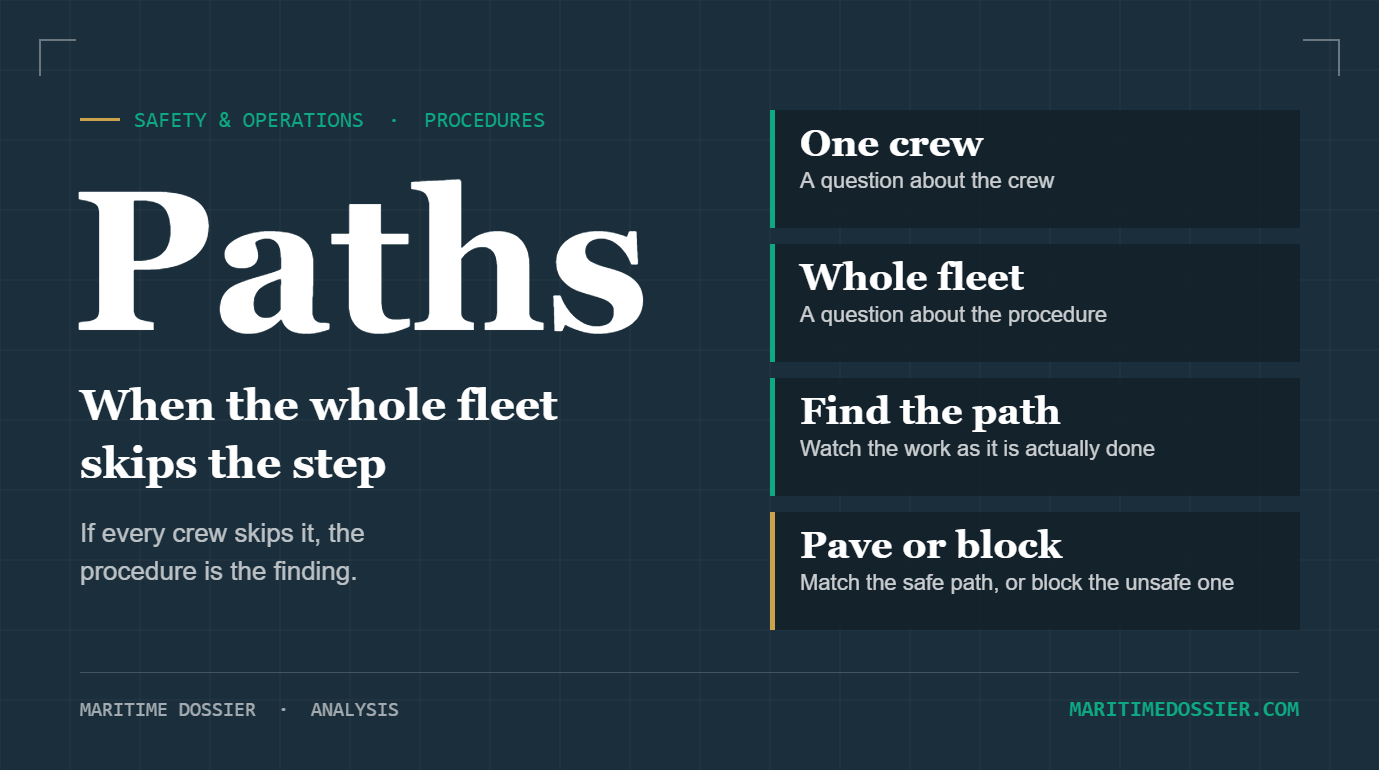
When the whole fleet skips the step, the procedure is the finding
If one crew skips a step, ask about the crew. If every crew skips it, ask about the procedure. What desire paths teach ship managers about non-compliance.
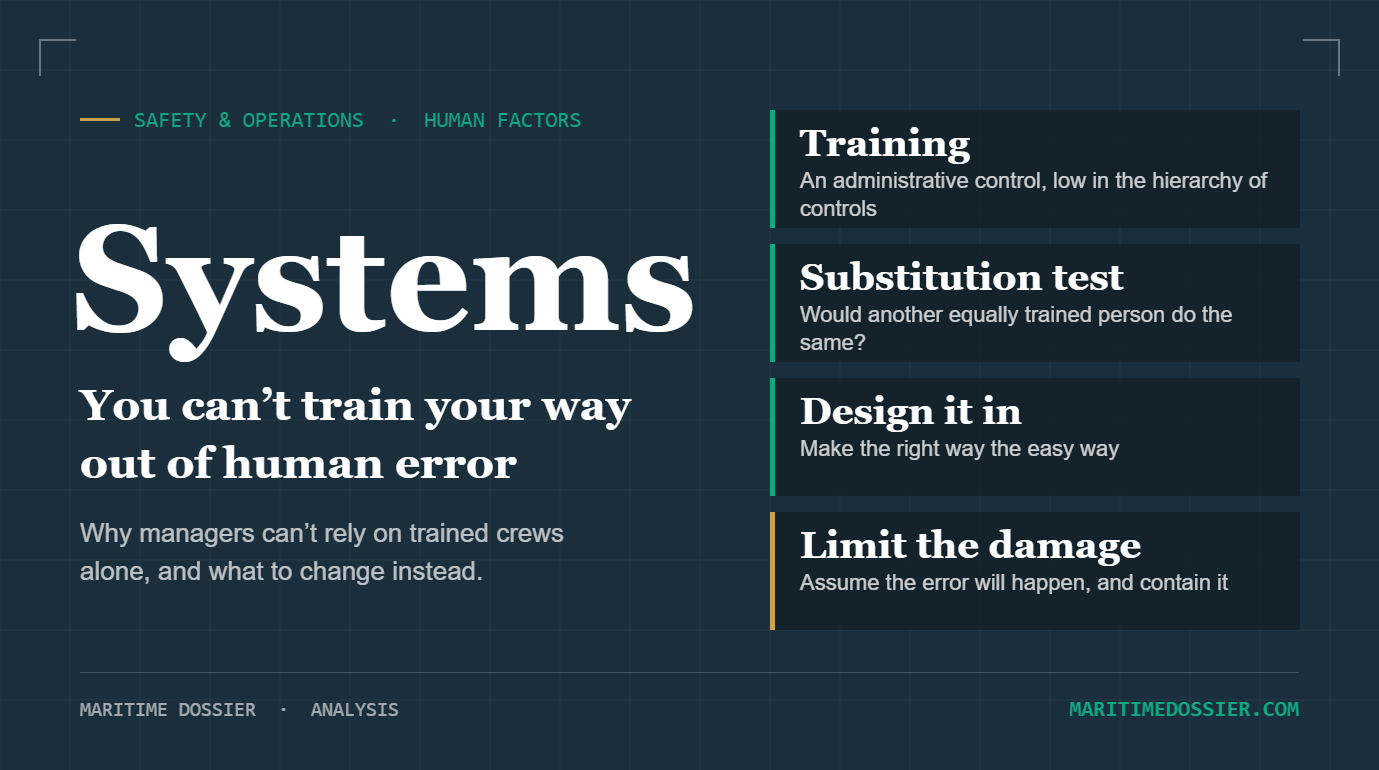
You can’t train your way out of human error
Training narrows how people work; learning means something changes afterwards. Why ship managers can’t rely on trained crews alone, and how to investigate so systems get fixed.
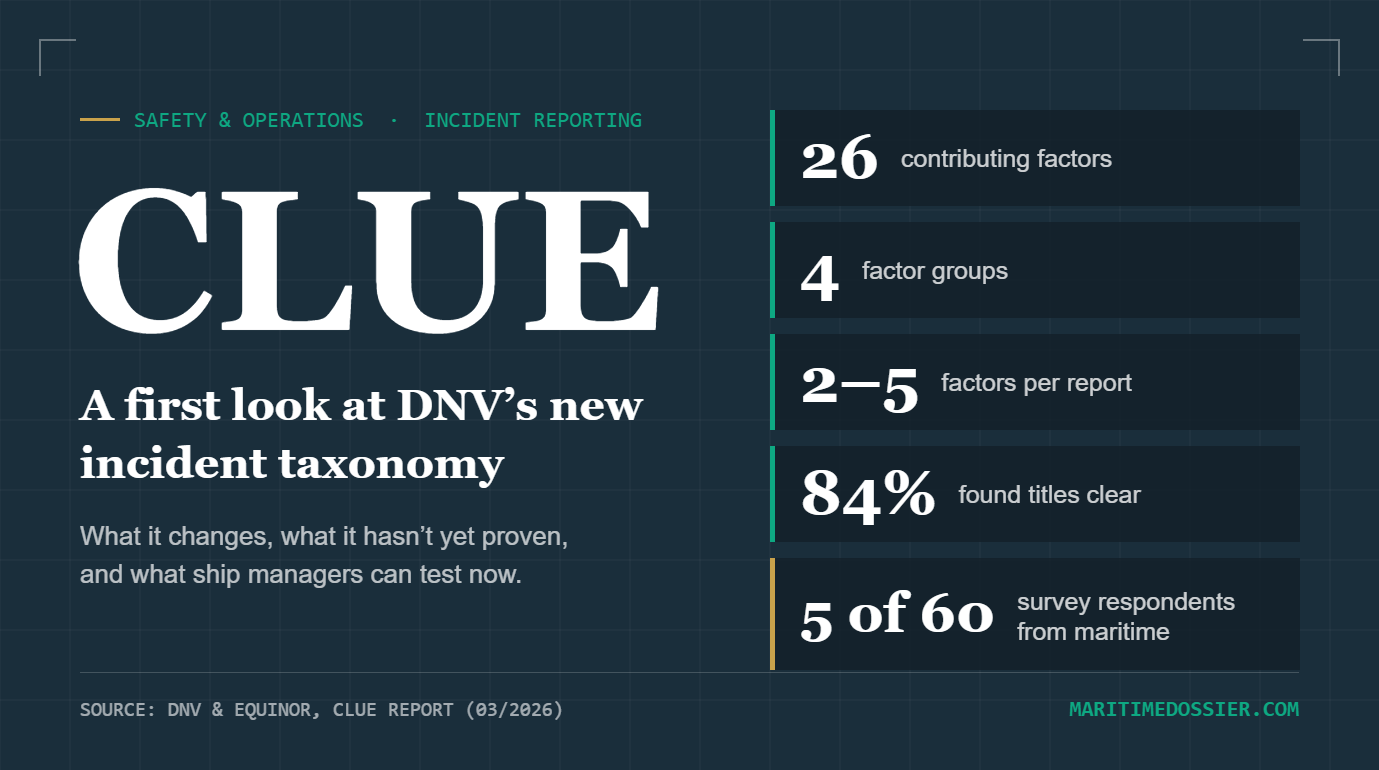
CLUE: a first look at DNV’s new incident taxonomy
DNV and Equinor’s new CLUE taxonomy replaces “causes” with 26 neutral contributing factors. What it changes, what it hasn’t yet proven, and what ship managers can test without…