

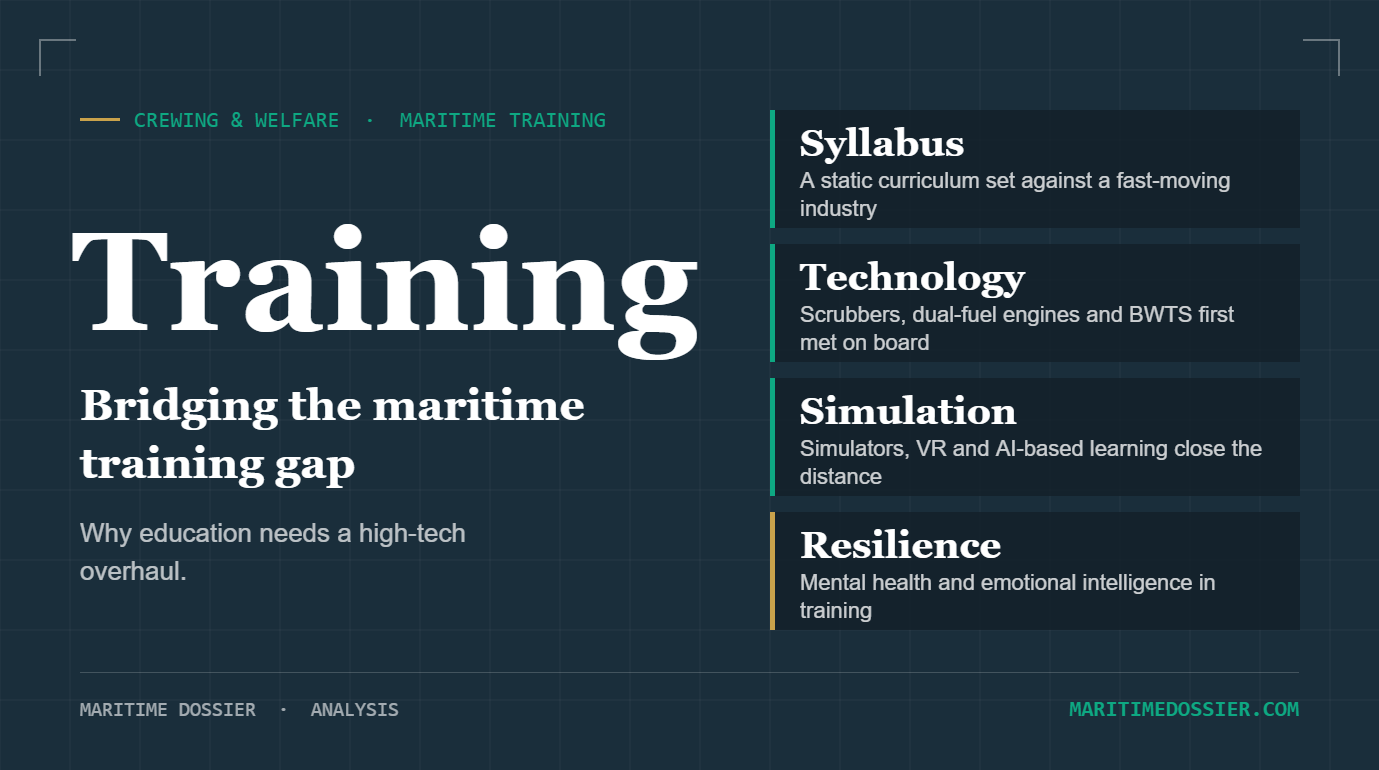
Why Education Needs a High-Tech Overhaul
The maritime industry stands at a critical crossroads. While rapid technological advancement reshapes global shipping, traditional regulatory frameworks are struggling to keep pace, and a training gap is opening between the classroom and the ship.
For many young officers, the transition from the classroom to the deck of a modern vessel is becoming increasingly jarring. This “knowledge gap” isn’t just an academic concern—it directly impacts the preparedness, confidence, and safety of the next generation of seafarers.
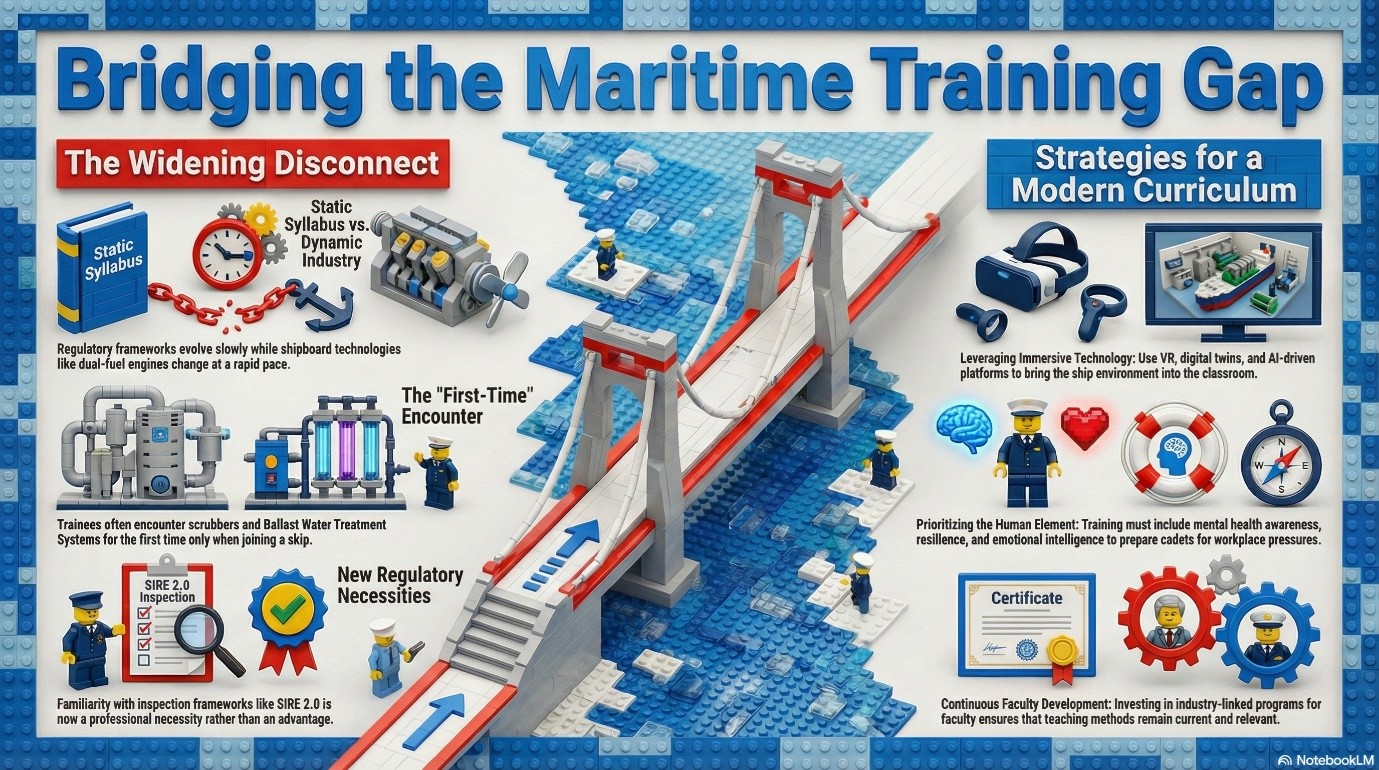
The Static Syllabus vs. a High-Speed Industry
For decades, the Directorate General (DG) Shipping syllabus has provided a structured foundation. However, regulatory frameworks require time for revision, whereas the industry is moving at breakneck speed.
The Technology Disconnect
Today’s vessels are floating marvels of engineering, featuring:
- Exhaust Gas Cleaning Systems (Scrubbers)
- Dual-fuel engines
- Ballast Water Treatment Systems (BWTS)
These technologies are integral to global compliance, yet many trainees encounter them for the first time only after joining their first ship. To bridge this divide, maritime institutes must move beyond the static curriculum and supplement education with:
- Targeted technical workshops.
- Real-world case studies.
- Guest lectures from active, high-ranking seafarers.
Modern Standards: Beyond the Basics
Technical skill is no longer the only requirement for a successful career at sea. Modern officers must be fluent in sophisticated inspection and vetting regimes, including:
These frameworks demand a deep grasp of operational behavior and risk assessment before an officer ever steps foot on a gangway.
Bringing the Ship into the Classroom
One of the most transformative solutions to this training gap lies in Simulation and AI-driven learning tools. As physical ship visits become harder to arrange, technology bridges the distance:
- Simulators: Replicate high-stress emergencies and complex maneuvers in a risk-free environment.
- Virtual Reality (VR) & Digital Twins: Allow students to explore engine rooms and equipment layouts virtually.
- AI-Based Platforms: Offer personalized training paths to help students strengthen specific weak areas.
Note: High-tech tools are only as effective as the instructors. There is a pressing need to upskill faculty members through digital professional development and direct industry exposure.
The Human Element: Resilience at Sea
While the new generation is digitally fluent, they face unique psychological challenges. Isolation, stress, and workplace pressure are inherent to life at sea. A technically brilliant officer is still at risk if they lack mental resilience.
Modern training must evolve to include:
- Mental health awareness and stress management.
- Emotional intelligence for better workplace communication.
- Resilience training to handle the rigors of long-haul deployments.
A Shared Responsibility for the Future
Closing the gap between the classroom and the sea requires a three-pronged approach:
| Stakeholder | Responsibility |
| Regulators | Provide flexibility for curriculum updates. |
| Institutes | Innovate beyond the standard syllabus with tech integration. |
| Shipping Companies | Share practical insights and data with academies. |
The future of global shipping depends on more than just automated engines; it depends on competent, confident, and resilient seafarers. That preparation must begin the moment a student enters the classroom.
Key takeaways on the maritime training gap
- The syllabus lags the industry. The DG Shipping syllabus gives a structured foundation, but regulatory frameworks take time to revise while technology moves quickly.
- Trainees meet new technology on board. Scrubbers, dual-fuel engines and ballast water treatment systems are often met for the first time after joining a ship, so institutes should add technical workshops, case studies and guest lectures.
- Modern standards matter. Officers must be fluent in inspection and vetting regimes such as SIRE 2.0 and RightShip RISQ 3.2.
- Simulation helps, if instructors are ready. Simulators, VR, digital twins and AI-based platforms can narrow the training gap, but they are only as effective as the instructors.
- Resilience is part of competence. Training should include mental health awareness, emotional intelligence and resilience.
- It is a shared responsibility of regulators, institutes and shipping companies.
Training alone is only part of the answer. For a wider look at why managers cannot rely on trained crews alone, see You can’t train your way out of human error.

Capt. Nivin is a Master Mariner with over 25 years of maritime experience, split between a distinguished career at sea and over a decade in shore-based leadership roles. Currently serving in a senior position with a leading global ship management company, he bridges the gap between traditional seafaring values and the rapid technological shift toward dual-fuel engines and digital vetting. A vocal…
Views expressed are the author's own and do not represent those of their employer.
LinkedIn profile