

Guidance to Masters, #4 article in the stop loss series
Duty Officer (MV ABC):
“Port Control, this is Motor Vessel ABC. My ETA to the pilot station is XXX LT. Kindly advise berthing prospects.”
Port Control:
“MV ABC, this is Port Control. Currently, there are no berthing prospects available. Anchorage is heavily congested. Please drift outside port limits. We will inform you when you may proceed in.”
Action Taken: Vessel instructed to drift outside port limits. Position monitoring commenced. Further instructions awaited from Port Control.
—this scenario is more common than we realize, and many vessels and even chartering teams might accept such port instructions at face value without fully assessing the implications for the Notice of Readiness (NOR) and its validity under the charter party terms.—
Here’s a breakdown of the issue:
🔍 What’s the Problem?
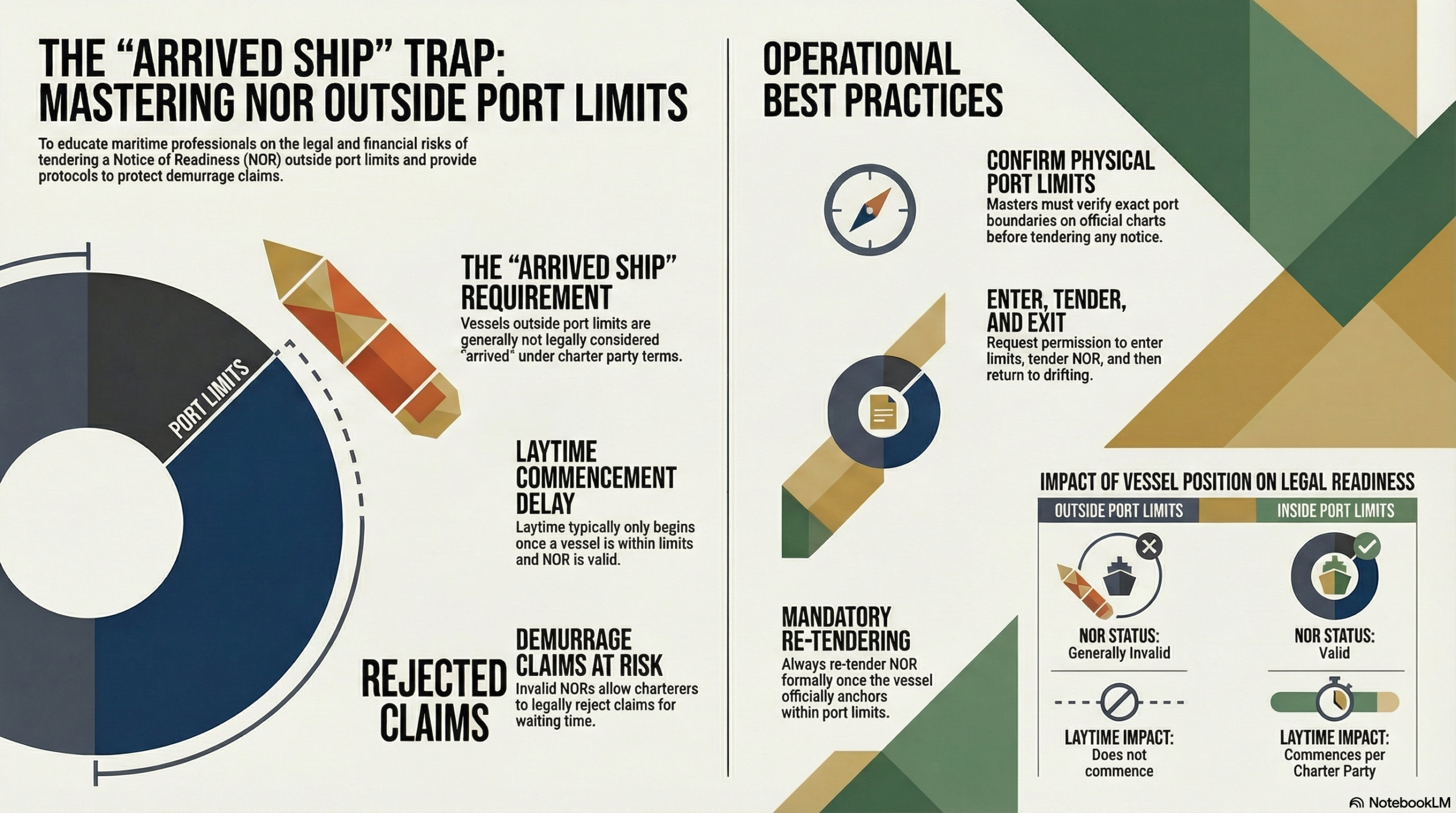
When Port Control instructs a vessel to drift outside port limits, and the Master complies before tendering NOR (or sometimes even after), this can invalidate the NOR under many charter party forms like ASBATANKVOY, BPVOY4, etc., because:
-Laytime typically starts only when the vessel is within port limits, arrived, and NOR is validly tendered.
-If the vessel is outside port limits, then it’s generally not considered an “arrived ship.”
⚠️ Why We Accept It Without Question
-Port control is seen as an authority, and their instructions are followed unquestioningly — especially if the anchorage is congested.
-Operational convenience and routine acceptance often override the awareness of charter party implications.
-Many assume that tendering NOR “close enough” or “soon after” drifting is sufficient — but legally, this can be contested.
⚓ How This Affects the NOR and Laytime
-Invalid NOR: If NOR is tendered while drifting outside port limits, it can be rejected by Charterers.
-Laytime delay: If the vessel must re-tender NOR only after anchoring inside port limits, any waiting time before that won’t count as laytime.
-Demurrage risk: Delayed laytime commencement may result in demurrage claims being rejected or reduced.
✅ What Should Be Done
-Master Awareness: Ensure Masters understand the legal definition of “arrived ship” and confirm port limits on charts.
-Documentation: If instructed to wait outside port limits, record VHF communications and notify Charterers immediately.
-Enter and Exit port limits: It is quite common to enter the port limits , tender NOR and then exit. Needleless to say this is to be done with port permission.
-Re-Tendering: Once inside port limits, re-tender NOR formally — especially if previously tendered outside.